A Japanese practice within a Moroccan spa menu
Shiatsu is a Japanese bodywork practice associated with attentive pressure using fingers, thumbs and palms, sometimes combined with gentle movement or stretching. Its presence in Morocco reflects the variety of contemporary spa menus; it should not be described as an ancient Moroccan hammam technique.
Different schools and practitioners work differently. Traditional explanations may use concepts such as meridians or energy, but those concepts should be presented as part of the practice's framework, not as proven diagnoses of internal organs or a guarantee of healing. Ask the therapist how they explain their own work in everyday terms.
Clothing, futon and treatment table
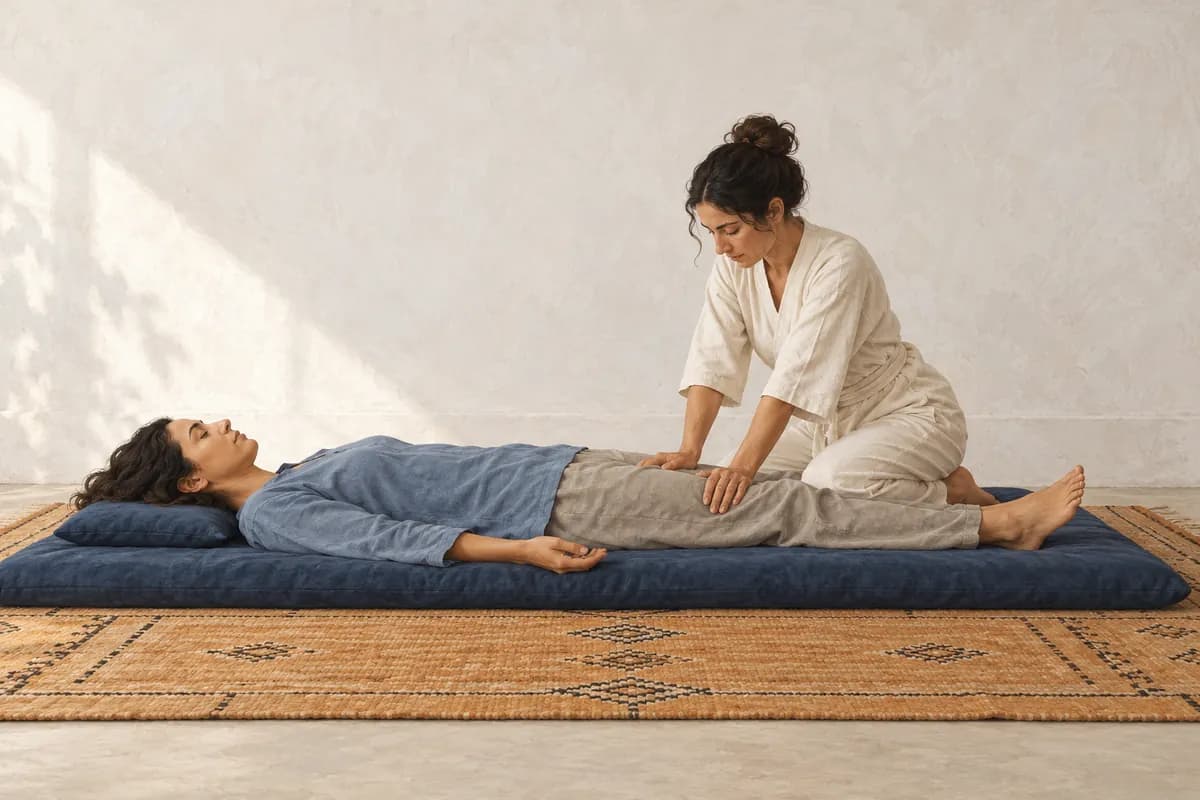
Shiatsu is commonly received through comfortable clothing, often on a futon. Some practitioners use a table or adapt positioning. Confirm the actual arrangement before arriving; an illustration of a floor mat is not a promise that every spa has that setup. Loose trousers and a top may be more practical than restrictive clothing if the team asks you to remain dressed.
The practitioner can apply still pressure, pause, change contact and introduce gentle supported movement. The pace differs from a continuous oil-gliding massage. You may be asked to turn or lie on your side, and support should be adjusted to what is comfortable for you. Oil is not an automatic component of the clothed style.
Sensation and communication
Pressure can feel broad and steady or more local, but discomfort does not validate a point or prove that an energy blockage exists. Ask for less pressure, less movement or a different position when needed. You should not be pushed into a stretch because it appears in a standard routine.
If you have difficulty getting onto a floor mat, have limited movement or need another accommodation, discuss that before booking. For pregnancy, an injury or a relevant health condition, seek appropriately qualified advice rather than assuming a clothed technique is automatically suitable.
Choosing shiatsu for a hammam day
Someone who prefers to remain clothed or dislikes oil may find the format appealing, subject to the provider's actual method. Someone wanting a fragrant oil massage or warm stones may be expecting a different service. Use the conversation to compare these experiences instead of treating them as interchangeable names for relaxation.
After a hammam, allow time to dry and put on the clothing needed for the session. Ask whether the shiatsu is delivered on a futon or table, what training the practitioner has, whether stretching is proposed and how the booked minutes are used. Its value lies in an agreed, comfortable encounter, not a promise to rebalance every health problem.
Make the session comfortable for you
Before settling in, tell the practitioner what you would enjoy: a lighter touch, more attention to the shoulders, quiet, or a position with extra support. Ask how changing and covering the body are arranged. You can leave an area out of the massage, adjust the pressure or ask for a pause throughout the session.
If you would prefer a woman or a man as your practitioner, mention this for each guest when requesting the appointment. A private treatment room, a couples session and a hammam reserved for your group are different arrangements; specify the one you want.
Give the whole visit enough time
Compare the chosen treatment’s duration with the time you have available. Allow for arrival, changing and a calm departure. When combining hammam and massage, ask how rinsing, drying and moving between rooms fit into the programme. Tea and transport should appear in the offer if they are included.
Each guest can choose a different treatment. Let the team know whether starting together matters, and use the venue’s menu for current prices and the amount payable for your group.
Before sending your request
For pregnancy, a recent operation or injury, persistent pain, swelling or a relevant skin condition, discuss suitability privately with a qualified health professional before choosing a technique. At the spa, explain any practical adjustment the practitioner needs to make. Send your preferred date and time, then check the team’s reply and the agreed arrangements before travelling.