A hammam visit is more than a list of treatments
Water, warmth, cleansing and time shared or set aside for oneself sit at the centre of the Moroccan hammam experience. A neighbourhood bath, a private treatment room and a hotel spa can all interpret that experience differently. There is no single menu that defines every Moroccan visit. Understanding the stages helps you ask better questions while leaving room for local practice and personal preference.
A contemporary package may add massage, a facial, a body mask or tea, but those additions should be described as additions. A hammam is not simply another name for a massage, and a long list of products does not automatically make a more authentic visit. The rhythm of arriving, washing, resting and being welcomed matters as much as the treatment names.
Before entering: the welcome and the practical questions
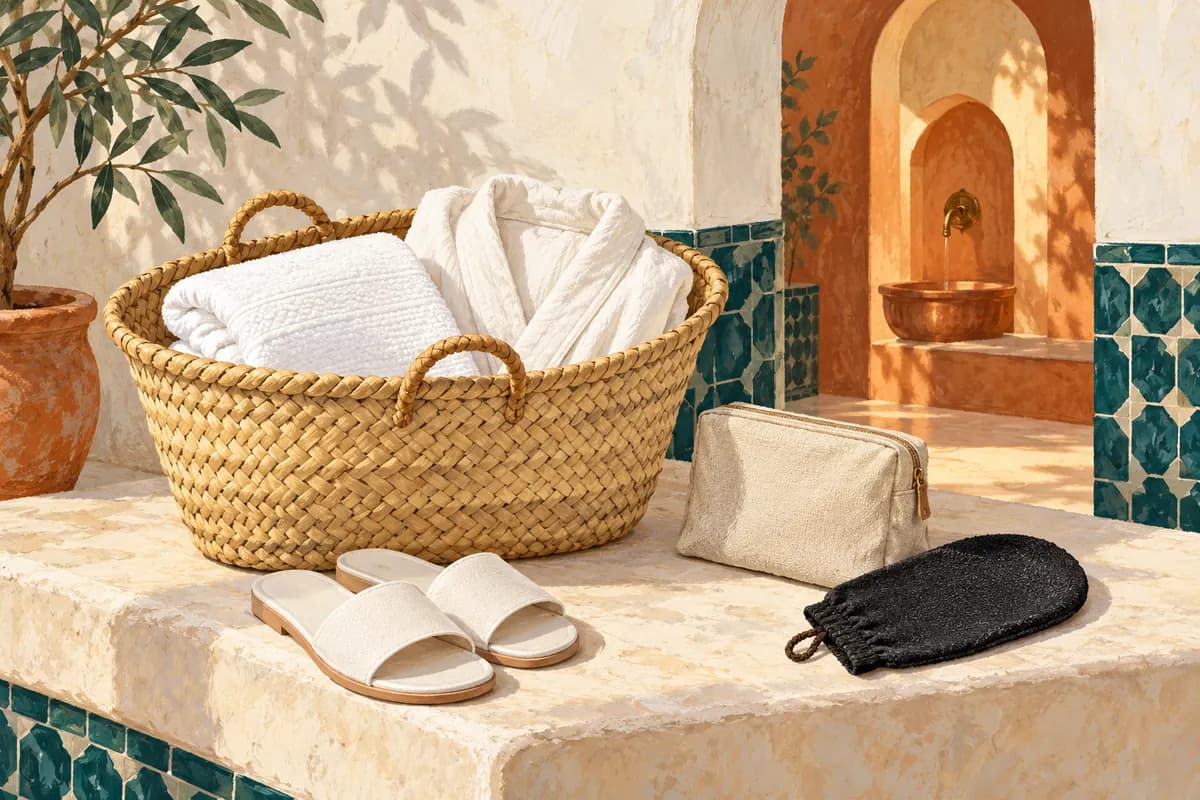
Check whether the space is shared or private, who provides the treatment, what you are expected to wear and what towels or footwear are supplied. If you are visiting as a couple, with children or with relatives, ask specifically how the space and timetable work. A private massage room does not establish that the hammam itself is private, and a group request does not guarantee one shared room.
You can ask for an attendant or therapist of a particular gender, but the team must confirm the arrangement. Explain essential preferences early and keep private health information for an appropriate conversation. Before putting valuables away, agree how the attendant will explain the next step if you do not speak the same language.
Warmth, rinsing and finding a comfortable pace
The beginning often involves warm water and time in a warm room. Some baths have a progression of spaces; others deliver the whole treatment in one room. Steam, room temperature and how long you remain are not a contest. Ask for a pause or to move somewhere cooler if you feel uncomfortable.
Rinsing prepares for cleansing and helps distinguish the wet hammam stage from a dry massage afterwards. Do not assume that every spa has a pool, sauna or circuit simply because it calls itself a hammam. Check the facilities actually listed and leave yourself time rather than trying to compress the ritual between two tightly timed activities.
Savon beldi: cleansing before the scrub
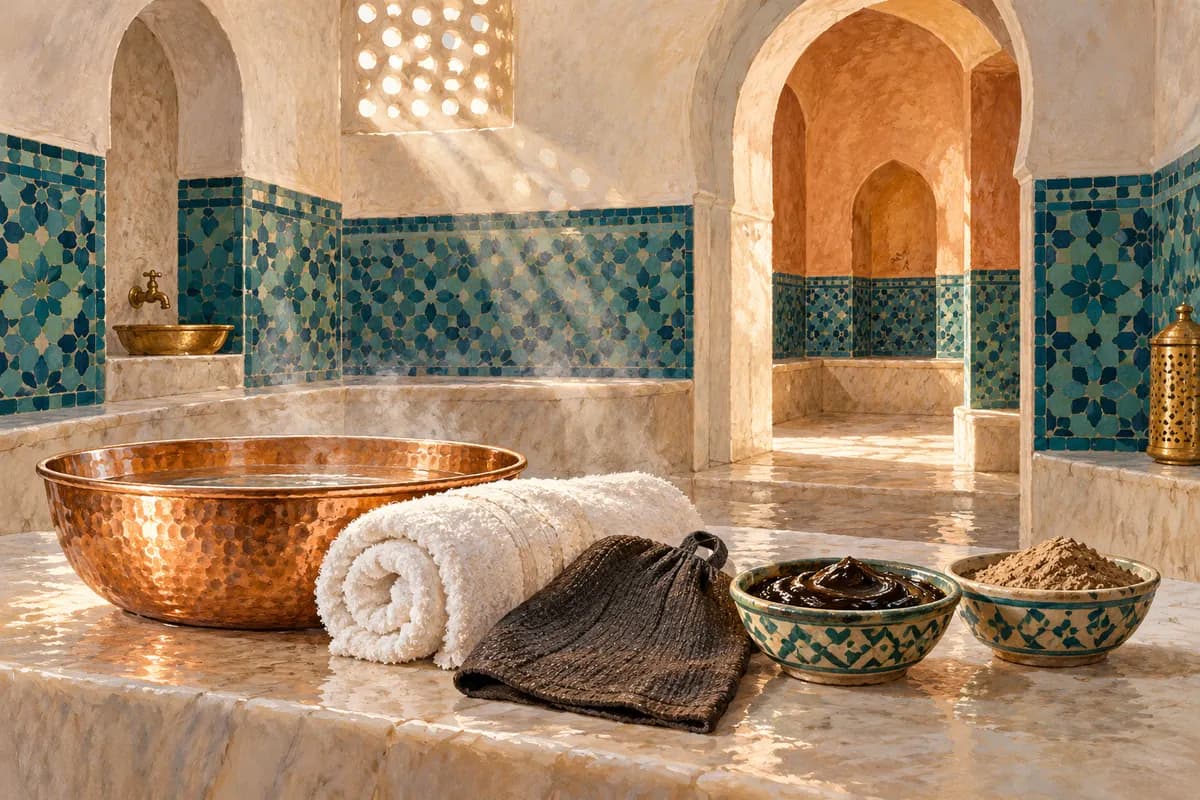
Savon beldi is the dark, paste-like black soap often associated with the Moroccan ritual. It is used for cleansing and is distinct from the textured kessa mitt. A product's colour or traditional name does not identify every ingredient: fragrance, eucalyptus or another addition should be checked on the actual formulation if sensitivity matters to you.
The attendant explains how it is applied and rinsed within that venue's sequence. This is not a reason to use soap on irritated skin or around sensitive areas without discussion. If you prefer a gentler treatment, say so before the scrub begins rather than waiting for discomfort to build.
Kessa: a separate exfoliation step
The kessa is a mitt used for mechanical exfoliation. Pressure, skin sensitivity and the area being treated should be discussed. Visible rolled material during a scrub is not a test of personal cleanliness, and stronger friction does not necessarily mean a better result. A first visit does not require proving that you can tolerate an intense scrub.
Tell the attendant about recent shaving, waxing, sun irritation or other relevant skin concerns, and ask whether the area should be avoided or the step changed. Agree what happens if you want to stop. The point of learning the sequence is to feel more at ease, not to reproduce a forceful scrub protocol at home.
Ghassoul, rose water and the products around the ritual
Ghassoul is a clay associated with Moroccan body and hair care. Depending on the offer, it may be used as a mask or wash, but it is not automatically included in every hammam. Rose water, henna and other local products also appear in Moroccan wellbeing traditions; their presence in a cultural overview is not permission to apply every ingredient to every guest.
Ask where a mask will be used, what it contains and whether hair washing is included. If you do not want your hair wet or a product applied to the face, make that clear. Argan oil may appear as a finishing body product or in a later massage, but a Moroccan setting does not guarantee pure argan or an unscented formula. Confirm the actual product rather than relying on the name of the ritual.
Moving from the hammam to a massage or facial
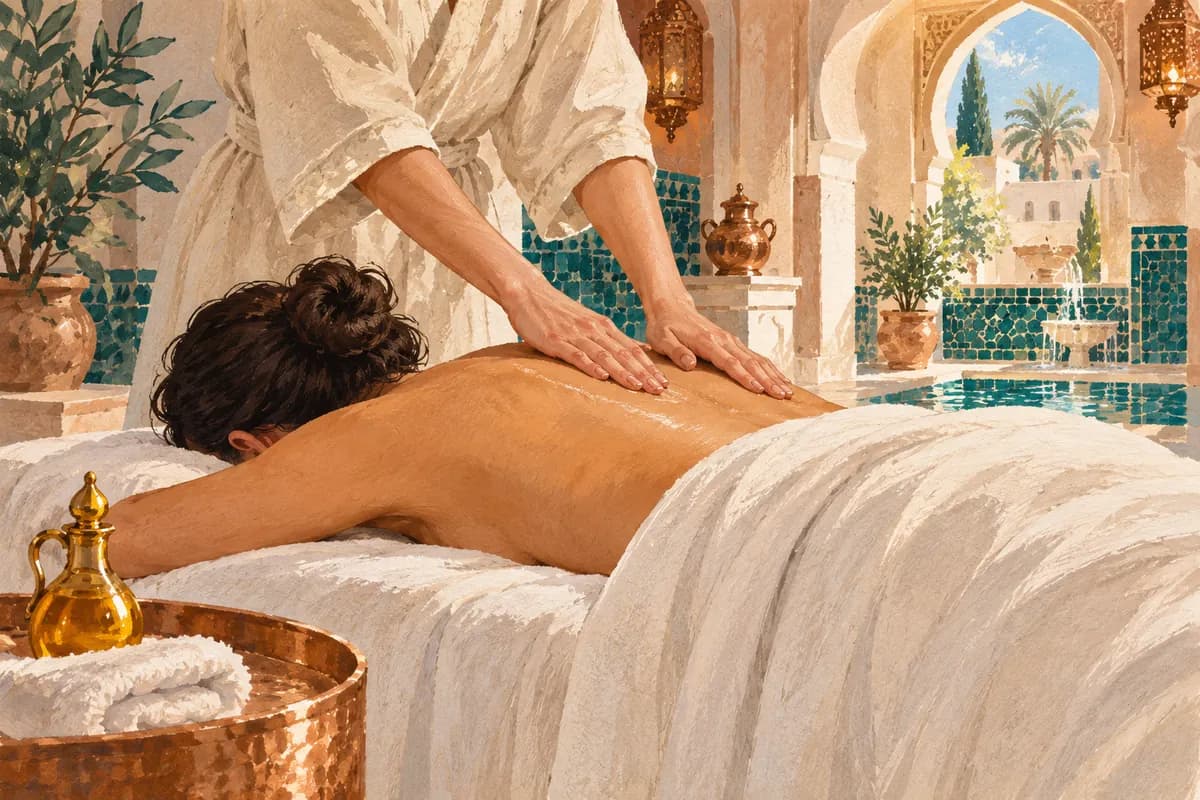
A massage is a separate dry-stage experience with its own room, timing, products and consent. A relaxing session emphasises flow; a back-focus treatment prioritises an area; shiatsu commonly uses clothing and pressure; hot stones introduce controlled heat. Four-hands work requires two therapists for one guest. Those differences deserve a conversation rather than a generic add-on tick.
Likewise, a facial may use products and steps that should be agreed after considering the other treatments planned. Ask the team to propose a comfortable sequence and enough time to rinse, dry, change and move between rooms. The selected package, not an editorial illustration, determines what is included and how long the hands-on appointment lasts.
Mint tea, a quiet seat and Moroccan hospitality
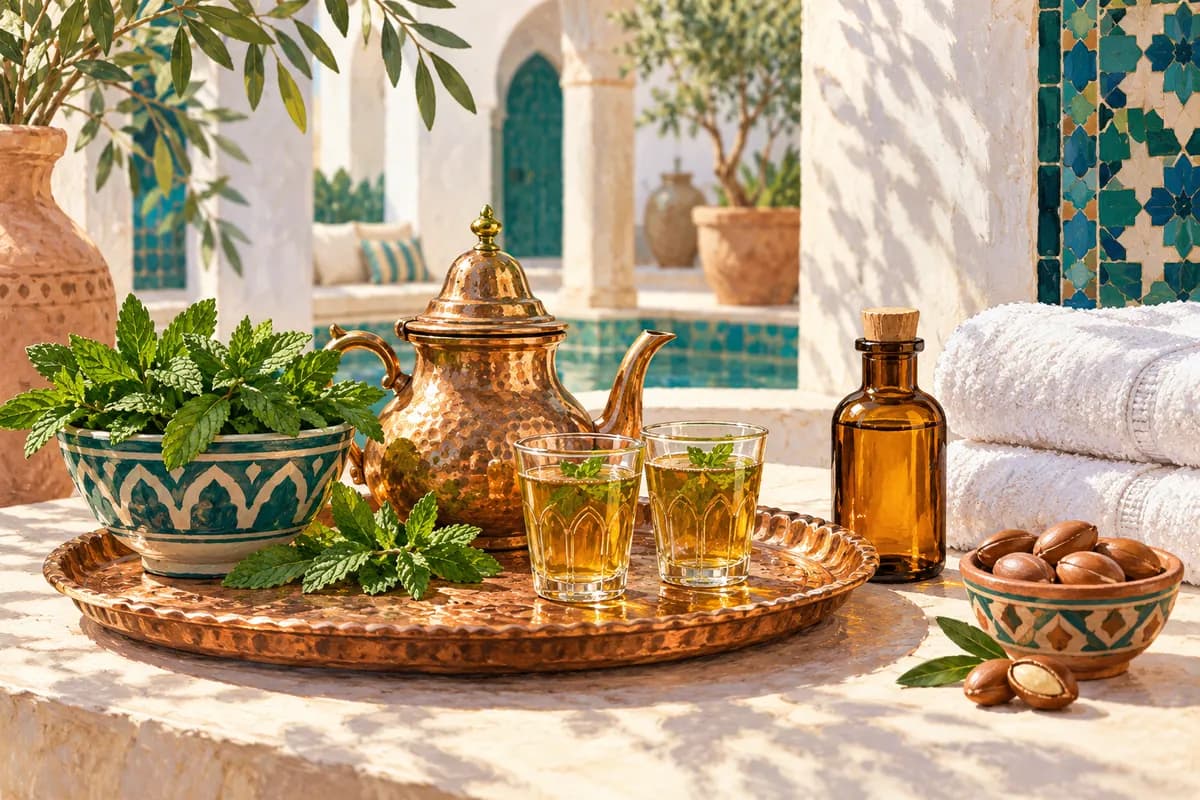
Mint tea is strongly associated with Moroccan hospitality and offers a welcome reason to sit down. It is commonly prepared with green tea and mint, often sweetened, with household and regional variations. If sweetness or caffeine matters to you, ask before it is poured; a preference may depend on how the pot is prepared. Drinking water can also be requested.
Some venues include tea, while others offer it separately or do not serve it. The currently listed Taghazout partner's source information includes mint tea; that fact should not be extended to every future venue. Pastries, fruit, a private tea lounge or a family meal need their own clear description. Ask what is provided, whether anything costs extra and whether dietary questions can be answered before accepting food.
Choosing a visit with enough room to enjoy it
Start with the atmosphere and privacy you want, then choose the actual treatment and duration. Leave room for arrival, changing and rest. For a family or couple, confirm each participant's arrangement instead of assuming a package solves every preference. If you are uncertain whether heat, exfoliation or massage is appropriate for a health condition, get suitable professional advice first.
Use our guides to understand the terms and the live catalogue to compare real offers. Submit the preferred date and exact start time, explain essential logistical requests and wait for the team's review. A well-planned visit is one whose details are understood, whose boundaries are respected and whose pace lets the hammam feel like an experience rather than a checklist.