Use a historical route, not a popularity ranking
These four places offer different ways into Morocco's hammam heritage. They were selected for the quality and variety of their documentation, not traveller ratings or a claim to be the country's four most popular baths. Reading them together reveals changes of period, setting and evidence.
The sequence is a reading route. It is not a same-day driving itinerary, a list of confirmed opening hours or a package sold by Morocco Hammam.
Walila: early medieval evidence
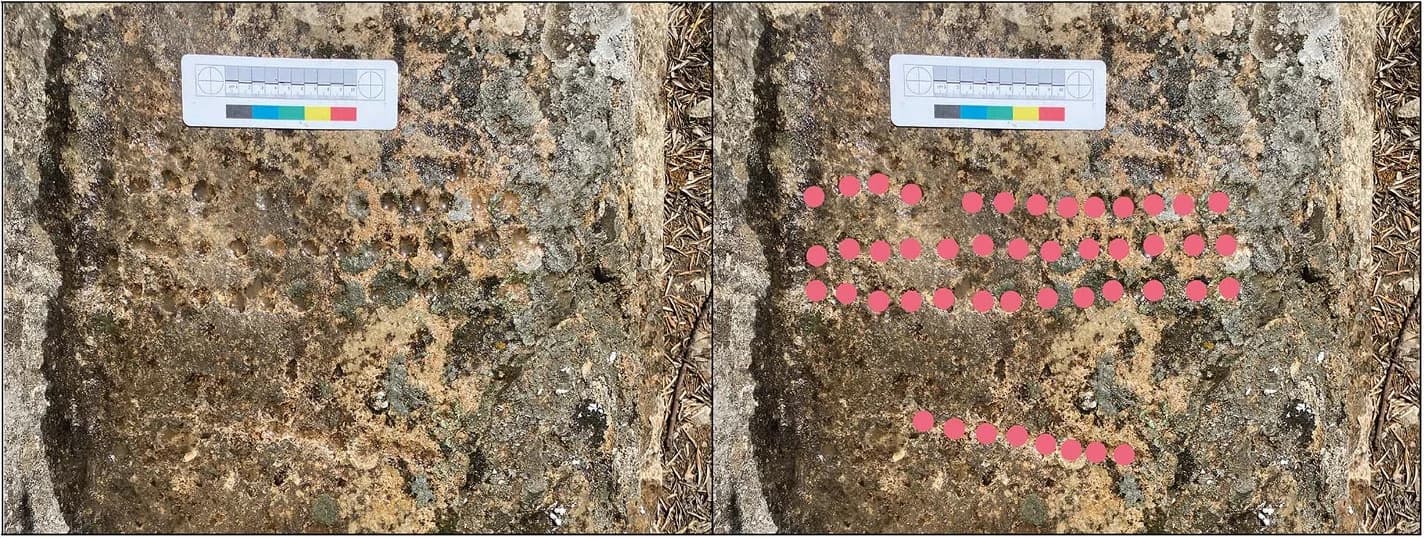
The hammam discussed in the 2026 Walila study belongs to the medieval phase associated with the Volubilis site. A carved gameboard brings communal activity into view. Distinguishing the early Islamic bath from the site's Roman remains prevents a familiar place-name from flattening several periods into one.
Aghmat: a city revealed through excavation
Aghmat's vaulted rooms, reception area and water infrastructure help reconstruct the life of a medieval town near the High Atlas. Reports place its early bath in the tenth–eleventh-century horizon, with later research discussing a tenth-century foundation. Excavation and conservation, rather than a modern treatment menu, are the basis of this account.
Seffarine: Fez and the Marinid chapter
The Ministry of Habous connects Seffarine with the Marinid era and records its restoration in 2019. Architectural work links the hammam with its craft quarter and examines both decorated and service spaces. Its place in the UNESCO-listed Medina of Fez should not be confused with a separate UNESCO inscription for the bath.
Mouassine: the Saadian neighbourhood
The Musée de Mouassine places the hammam in a larger ensemble under Abdallah al-Ghalib, with work on the mosque starting in 1562. The fountain, bath and other facilities make the urban setting central to the story. A dated mosque foundation does not provide an exact completion date for every annex.
Turn curiosity into a respectful visit
Before travelling, check each site's current access with its responsible operator or institution. For an operating bath, ask about admission, changing, privacy and photography; for an archaeological site, follow conservation rules. None of these profiles establishes treatment availability.
To book a present-day service, use a listing with an actual menu and appointment process. You can value a historic hammam as heritage without assuming it is offered for reservation on this platform.
Sources
- Penn, Fenwick & Limane — Gaming in the Maghreb al-Aqsa (published 5 June 2026)
- IRCAM — Nouvelles découvertes archéologiques à Aghmate
- Ministère des Habous — restauration du hammam Seffarine (17 avril 2019)
- Musée de Mouassine — histoire du quartier et de son ensemble saadien
- UNESCO — Medina of Fez (inscribed 1981)
- UNESCO — Medina of Marrakesh (inscribed 1985)