Feet, pressure and the reflexology framework
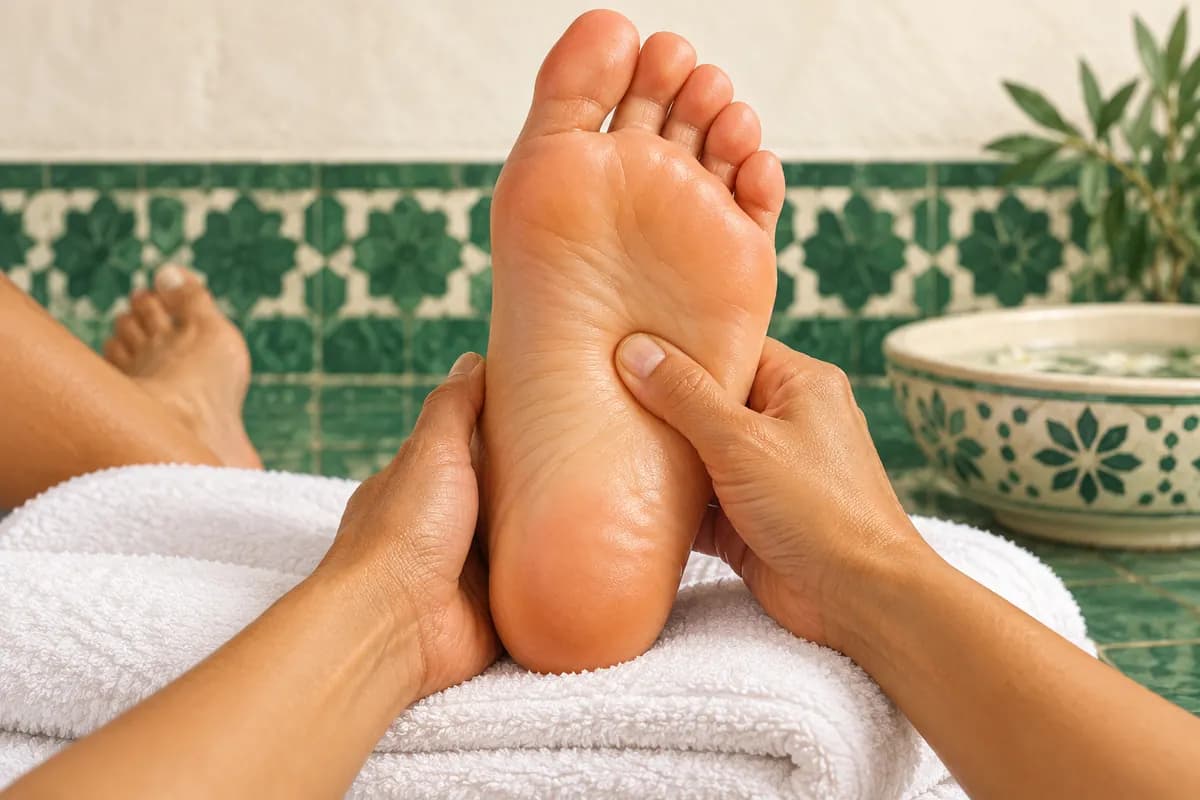
Foot reflexology uses pressure on selected areas of the feet. Traditional reflex maps associate those areas with other parts of the body. That proposed correspondence is part of reflexology's theory; it is not a validated map for diagnosing or treating an organ through the sole. NCCIH states that the claimed healing effects through these points have not been proven.
A general foot massage may use broad gliding and kneading simply for comfort, without following a reflex map. Some spa appointments combine the two. Ask how the therapist defines their treatment, rather than assuming every foot massage is reflexology or that every reflexology appointment follows the same sequence.
How a visit may unfold
You may sit in a supported chair or recline on a treatment table with the lower legs supported. The therapist should agree which areas will be touched, check comfort and explain whether cream or oil is used. Cleaning or a foot soak may be offered, but should not be assumed to be included or taken from a fixed amount of hands-on time without explanation.
The practitioner can alternate between holding the foot, broad contact and more local thumb or finger pressure. They may spend time on each foot in turn. Tell them if you are ticklish, if pressure is uncomfortable or if the ankle support needs changing. A sensitive point does not, on its own, prove that another part of your body is unwell.
What to expect without a healing promise
You may enjoy resting after walking around a medina or travelling, but a pleasant sensation is not evidence of a treatment for a medical condition. Reflexology should not delay assessment of persistent foot pain, unexplained swelling or another health concern. It cannot be used to diagnose a digestive problem or guarantee better circulation.
Discuss wounds, infection, a recent injury, reduced sensation or another relevant condition with an appropriately qualified professional before having the feet worked on. If a provider promises that pain must be endured to clear a particular organ, that claim is not supported by the reflex map itself.
Reflexology alongside a Moroccan spa visit
This is a contemporary treatment option, not the same step as a kessa scrub in a hammam. Confirm whether you are booking only the feet or a larger combination. If a hammam or pedicure is also planned, ask the team to agree the order and clarify how the skin and products will be handled between treatments.
Useful questions are simple: what technique do you use, what is included in the appointment, how do you adjust pressure and what is the actual duration? Wear something that makes access to the feet practical and leave enough time to put your shoes back on without rushing.
Make the session comfortable for you
Before settling in, tell the practitioner what you would enjoy: a lighter touch, more attention to the shoulders, quiet, or a position with extra support. Ask how changing and covering the body are arranged. You can leave an area out of the massage, adjust the pressure or ask for a pause throughout the session.
If you would prefer a woman or a man as your practitioner, mention this for each guest when requesting the appointment. A private treatment room, a couples session and a hammam reserved for your group are different arrangements; specify the one you want.
Give the whole visit enough time
Compare the chosen treatment’s duration with the time you have available. Allow for arrival, changing and a calm departure. When combining hammam and massage, ask how rinsing, drying and moving between rooms fit into the programme. Tea and transport should appear in the offer if they are included.
Each guest can choose a different treatment. Let the team know whether starting together matters, and use the venue’s menu for current prices and the amount payable for your group.
Before sending your request
For pregnancy, a recent operation or injury, persistent pain, swelling or a relevant skin condition, discuss suitability privately with a qualified health professional before choosing a technique. At the spa, explain any practical adjustment the practitioner needs to make. Send your preferred date and time, then check the team’s reply and the agreed arrangements before travelling.