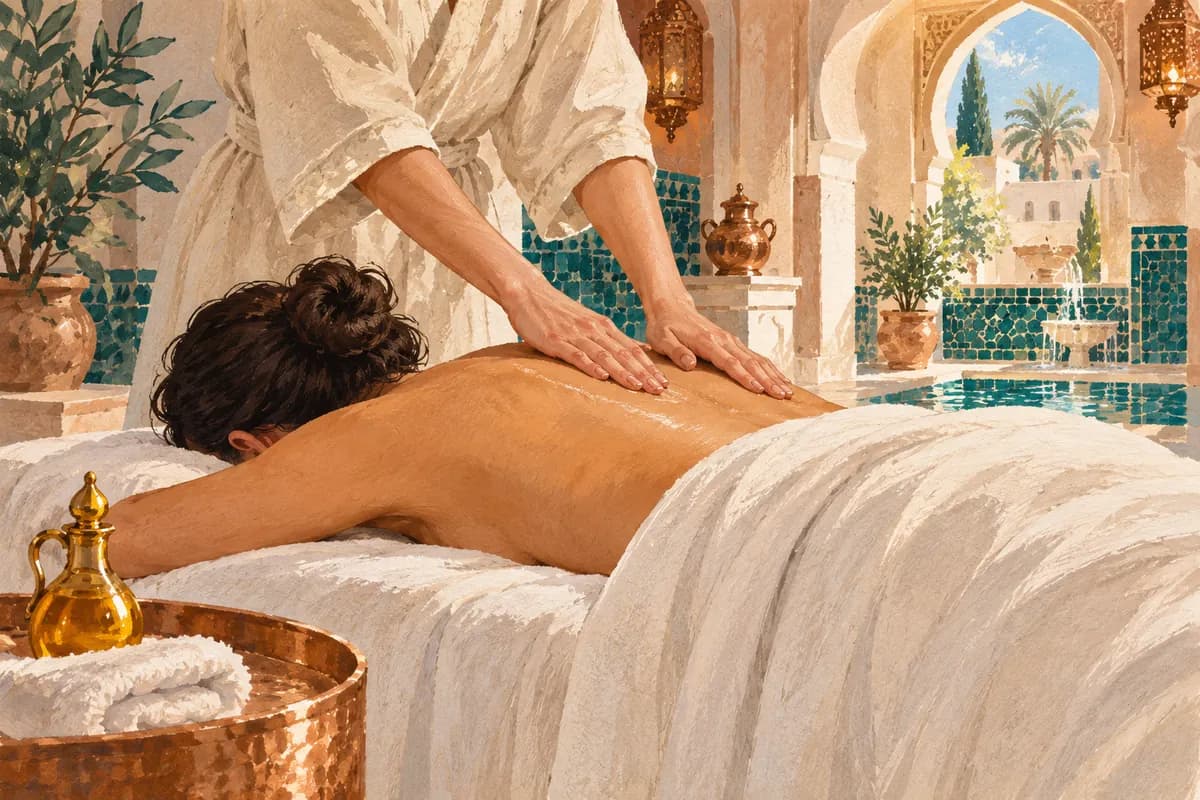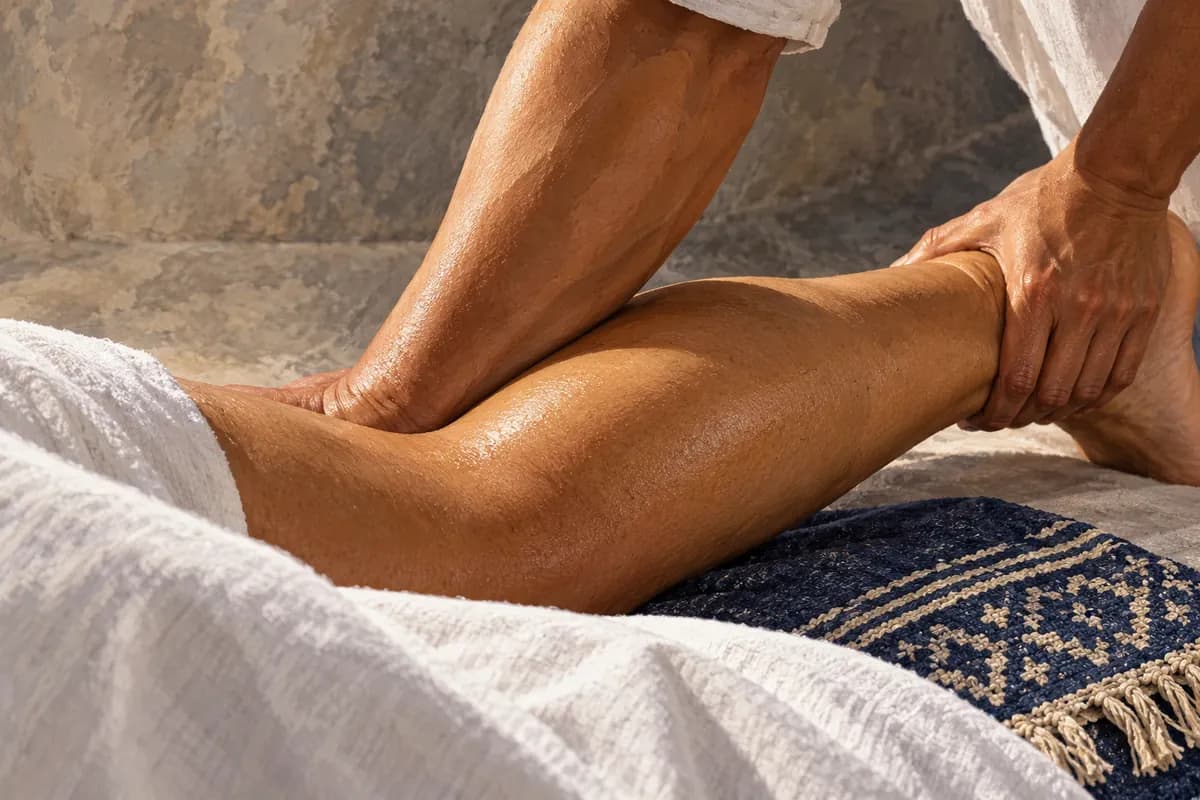
Tonic and deep tissue are menu descriptions
Deep-tissue massage usually describes slower, more focused work on muscular areas and the surrounding soft tissues. Tonic can mean a firmer or more energetic style, but the two labels are not identical technical qualifications. The current source menu groups them together; ask the therapist what their treatment actually includes rather than assuming a sports rehabilitation service.
It may suit someone who prefers sustained attention to an agreed area over a flowing full-body routine. That preference is different from needing a diagnosis for pain. An injury, unexplained symptoms or a recent operation deserves appropriate clinical advice before a spa treatment is selected.
How focused work is organised
A useful session begins with priorities: the shoulders, upper back or legs, for example. The therapist can start with broad contact, then use slower strokes or sustained pressure with hands and, depending on training, forearms. One area may receive several passes while others receive less time. This is why a full-body expectation and a request for extensive local work need to be discussed together.
The purpose of this description is to help you recognise the pace, not teach someone to apply force. Ask how the therapist plans to work, how you will be supported and whether repositioning will be needed. You should be able to breathe normally rather than hold your breath against the pressure.
More pain does not mean a better appointment
Depth is not a competition. Clear feedback during a slow stroke is more useful than waiting until the end: reduce the pressure, move away from that spot, or stop. Sharp, radiating, burning or electric sensations should not be presented as proof that a knot is being removed. Bruising is not a target or a measure of success.
People can feel tender after stronger work, but severe or worsening symptoms should not be dismissed as a normal detox response. The NCCIH notes that serious adverse effects are uncommon but possible, with vigorous techniques among the circumstances reported. A careful health conversation and a willingness to adapt are more valuable than a promise of maximum intensity.
Matching it to your hammam day
After heat and a scrub, tell the therapist how your skin feels. You do not need to add firm massage simply to make a package feel complete. A lighter session or work on fewer areas may be the experience you prefer. Also distinguish a back-focus treatment from deep-tissue technique: one describes the area, the other an approach that may or may not be used there.
Ask three concrete questions: what does tonic mean here, which areas fit into the booked time, and how will pressure be adjusted? Confirm the product used and avoid scheduling the end so tightly that you have to jump straight off the table and leave.
Privacy, preferences and a useful first conversation
Tell the therapist what would make the appointment comfortable: lighter pressure, a particular area to avoid, a preference for a woman or a man, quiet rather than conversation, or an adjustment to your position. A preference is a request until the team confirms it. Clothing and draping should be explained before you change; only the agreed area needs to be uncovered, and you can pause or stop. A private treatment room, a couple's appointment and a private hammam are different arrangements, so ask about each separately.
Plan the whole visit, not only the minutes on the menu
Compare the selected service's actual duration and current price in the booking menu. Changing, a consultation, travel and a tea break may sit outside the hands-on time. If you want a hammam, facial or another massage as well, ask the team to agree the order and the total visit length; nothing is included simply because it appears in an illustration. Leave time to get dressed, drink some water and return to the rest of your day without rushing.
Health questions and confirmation
This is an experience guide, not a diagnosis or a self-treatment protocol. Discuss an injury, pregnancy, recent surgery, persistent pain or swelling, skin problems, medication or another relevant condition privately with an appropriately qualified professional before choosing a technique. Keep sensitive medical details out of public notes. Submit your preferred date and start time, then wait for the team's availability response and any essential preference to be confirmed before travelling.