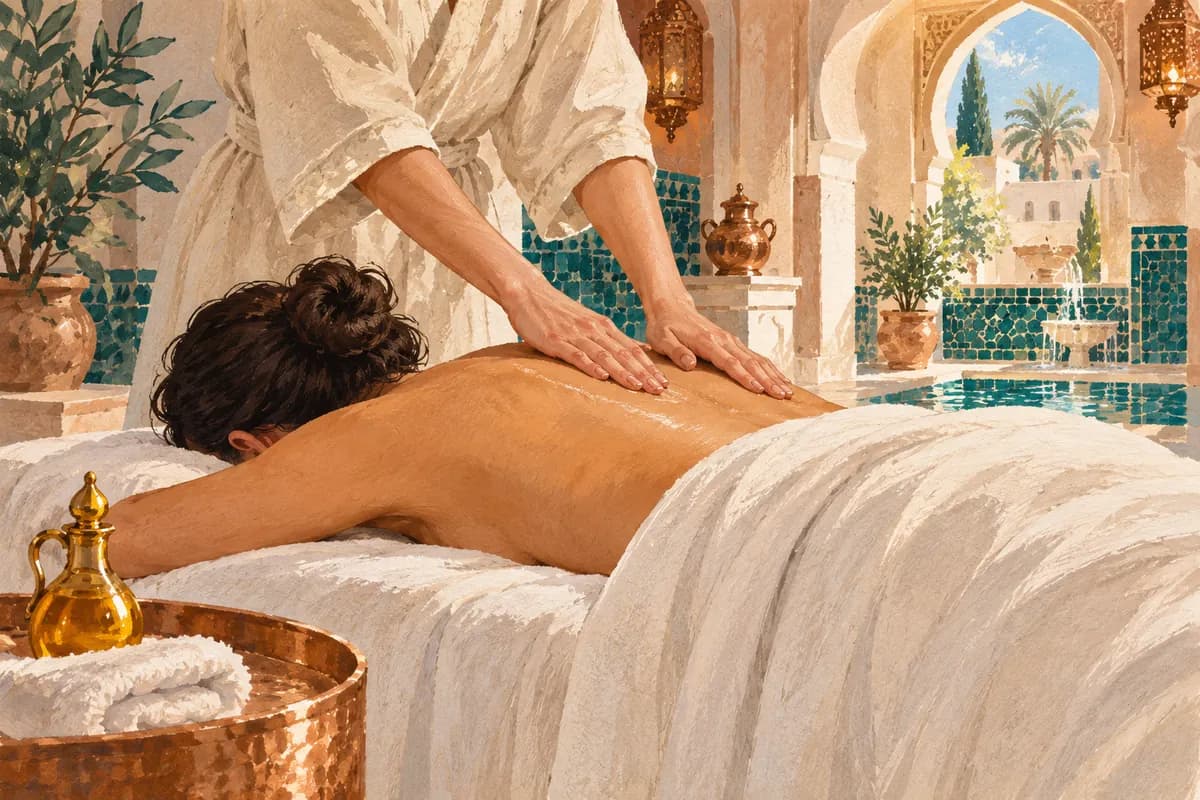
An area of focus rather than one fixed technique
A back-focus massage reserves the appointment for an agreed part of the back and possibly related shoulder or neck areas. The name describes where time is spent, not how hard the therapist must press. It can use gentle flowing work, slower kneading or a mixture, depending on training and your preferences.
This can be a useful choice if you would rather give one area time than expect a full-body routine. Tell the therapist whether you mean the upper back, the shoulder area or general back comfort. A request for attention does not ask them to diagnose a disc, nerve problem or injury.
The conversation shapes the sequence
The therapist should agree the working area and ask about comfortable positioning. You may lie face down with support for the head or use another position if that is more comfortable and appropriate. Do not stay in an awkward face cradle simply because the appointment has begun; a small adjustment to support can change the whole experience.
Work may start broadly across the back before moving to specific muscular areas. Ask whether the neck, arms, scalp or lower back are included instead of assuming the label covers them all. More time on a particular shoulder necessarily leaves less time elsewhere. A clear priority makes the chosen duration more useful.
Pressure and the difference from manipulation
Massage involves contact with soft tissues; a spa back treatment is not permission for spinal manipulation or sudden joint movements. Pressure should be discussed and adjusted, and a painful point does not need to be forced. Tell the therapist immediately about sharp, travelling, numb or otherwise unusual sensations.
A back massage can be enjoyed for comfort, but persistent pain, weakness or unexplained symptoms require appropriate assessment. It should not be sold as a guaranteed correction of posture, a way to put vertebrae back in place, or a replacement for prescribed care. A qualified practitioner can explain their scope without promising a diagnosis.
Combining a focused session with the hammam
If the same area has just been scrubbed, mention any skin tenderness before oil or pressure is applied. Some guests prefer a gentler massage after heat; others prefer to separate the two experiences. The team should clarify the transition and whether drying and changing are outside the treatment time.
Ask what back-focus means on this menu, what pressure styles are available and which position will be used. Compare with relaxing massage for broader coverage and tonic massage for a slower focused approach. The best selection is the one whose plan matches your priorities, not simply the label that sounds strongest.
Privacy, preferences and a useful first conversation
Tell the therapist what would make the appointment comfortable: lighter pressure, a particular area to avoid, a preference for a woman or a man, quiet rather than conversation, or an adjustment to your position. A preference is a request until the team confirms it. Clothing and draping should be explained before you change; only the agreed area needs to be uncovered, and you can pause or stop. A private treatment room, a couple's appointment and a private hammam are different arrangements, so ask about each separately.
Plan the whole visit, not only the minutes on the menu
Compare the selected service's actual duration and current price in the booking menu. Changing, a consultation, travel and a tea break may sit outside the hands-on time. If you want a hammam, facial or another massage as well, ask the team to agree the order and the total visit length; nothing is included simply because it appears in an illustration. Leave time to get dressed, drink some water and return to the rest of your day without rushing.
Health questions and confirmation
This is an experience guide, not a diagnosis or a self-treatment protocol. Discuss an injury, pregnancy, recent surgery, persistent pain or swelling, skin problems, medication or another relevant condition privately with an appropriately qualified professional before choosing a technique. Keep sensitive medical details out of public notes. Submit your preferred date and start time, then wait for the team's availability response and any essential preference to be confirmed before travelling.